The squirrel who dared to fly:by Natalie H
I dedicate this book to Kiley for being the best bio partner and getting me through biology with all the laughs and sometimes tears.

The Great Nut-Snap Adventure!
The sun was just beginning to dip behind the jagged peaks of the Whispering Pines, painting the sky in streaks of grape-purple and neon orange. Most of the forest animals were tucking their noses into their paws for a long night's sleep, but for Flip, the day was only just beginning.
High up in the canopy of an old oak tree, Flip paced back and forth on a mossy branch. He wasn't your average squirrel, he soared.
"Tonight’s the night," Flip whispered, adjusting his lucky leather goggles. Deep in the heart of the "Forbidden Valley"—a place where the shadows grew long and the owls grew hungry—lay the Golden Acorn. Legend said it tasted like honey and sunshine, and Flip was determined to be the first squirrel to find it.
While many flying squirrels are doing just fine, there are two specific types in the United States that have spent time on the endangered list because they need our help,The Virginia Northern Flying Squirrel
This little guy lives in the high, chilly mountains of Virginia and West Virginia, and The Carolina Northern Flying Squirrel. These squirrels live even further south, in the highest peaks of the Appalachian Mountains (like in North Carolina and Tennessee).
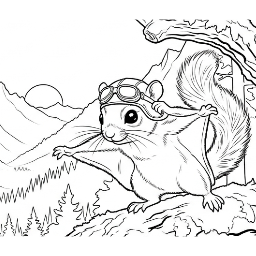
Meet the Midnight Marvel: Flip!
Did you know that Flip has a "secret identity" name? In the world of science, he goes by Glaucomys volans (pronounced: glo-KOH-meez VOH-lans). It sounds like a magic spell, right? In a way, it is! It roughly translates to "silver-gray flying mouse."
Even though he looks like a tiny superhero with a built-in cape, Flip is actually a mammal—just like you, your dog, or even a giant blue whale!
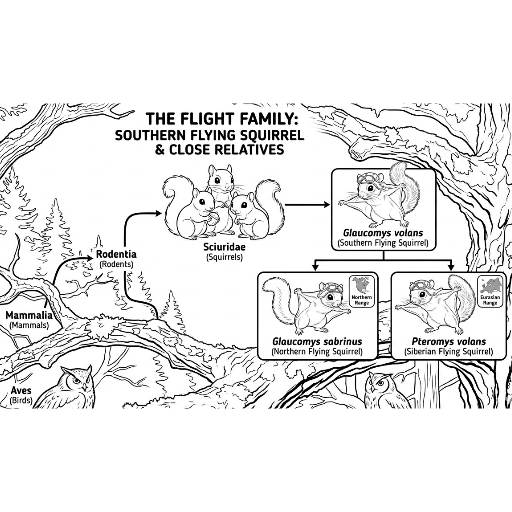
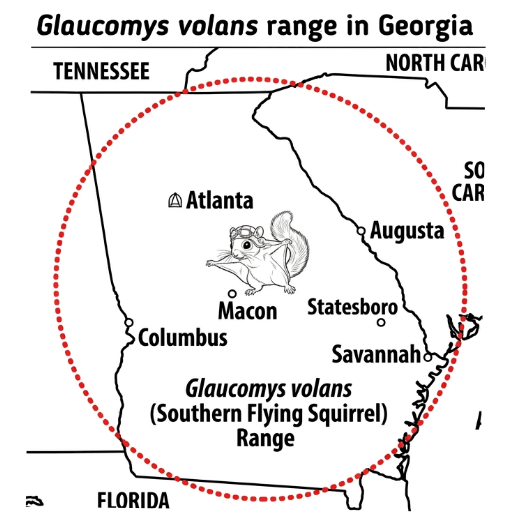
Where Does a Southern Flying Squirrel Live?
A Southern Flying Squirrel (scientifically known as Glaucomys volans) doesn't just live in one state like Georgia; it can be found all over the eastern United States, from the Canadian border down to Florida. This means they are very good at adapting to different kinds of climates. In the northern parts of their habitat, the winters can be very cold and snowy, while the southern areas are hot, steamy, and never see snow. These squirrels are tough, but they all share one big need: trees!
The "Rules" of the Neighborhood
Temperature: Animals pick homes to stay safe from the weather. Some dig deep holes to stay cool in the heat, while others find tree hollows to block out the freezing wind.
Water: Every animal needs to drink! Most build their homes near a stream or pond. Some, like beavers, even use water as a moat to keep predators away.
Soil Type: For animals that live underground, the dirt must be "just right." If it’s too sandy, the tunnels collapse; if it’s too rocky, they can’t dig.
Sunlight: Some animals build nests in sunny spots to stay warm, while others, like owls, hunt for dark, shady places to sleep during the day.
Trees: These provide the "bones" of a home. A squirrel needs a tree that is tall enough for safety and strong enough to survive a big storm.
The southern flying squirrel is an omnivore, which means it eats both plants and animals. While many people think squirrels only eat nuts, these little gliders have a very mixed menu!
What’s on the Menu? Since they are active at night, they spend their time searching for: Plants: Hickory nuts, acorns, berries, and seeds. Fungi: They love mushrooms and lichens. Animals: They will eat insects, bird eggs, and even small baby birds. Because the southern flying squirrel eats both plants and animals, it can be both a primary and secondary consumer. It’s like having a diet that is half salad and half chicken nuggets! Primary Consumer: This is an animal that eats plants. When the squirrel eats an acorn, it is acting as a primary consumer because it is getting energy directly from a "producer" (the tree). Secondary Consumer: This is an animal that eats other animals. When the squirrel eats a beetle or a bird egg, it moves up the food chain to become a secondary consumer.
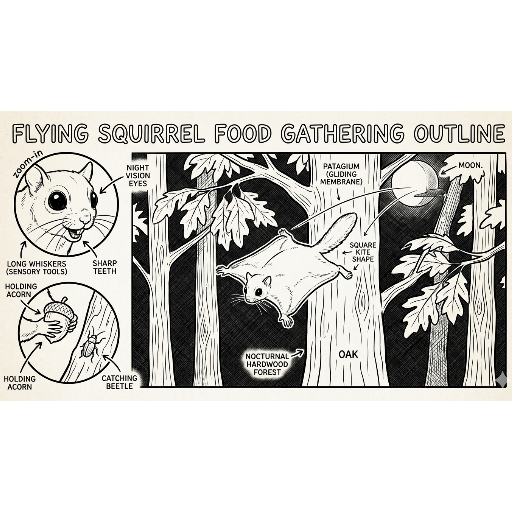
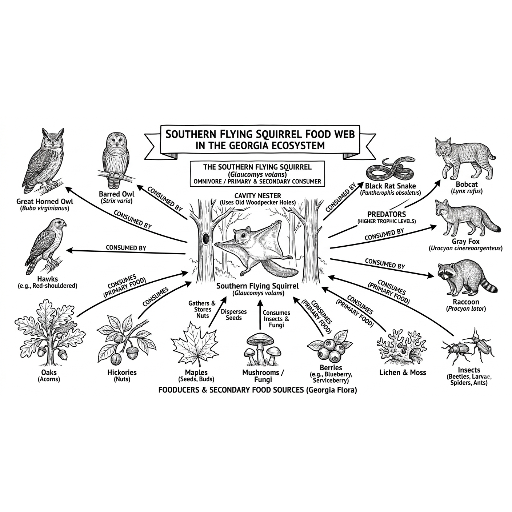
The Southern flying squirrel is a tiny, nighttime superstar of the Georgia woods! Even though they are small, they play a big role in keeping our forests healthy.
Here is how they fit into the Georgia Food Web:
The Quick Chain:Sun-Hickory Nut-Flying Squirrel -Owl. Fun Fact: They don't actually fly! They use a fold of skin like a built-in parachute to glide from tree to tree.
A physical adaptation is like a "survival toolkit" built into an animal’s body. These are body parts—not learned tricks—that help animals stay alive, eat, and stay safe.
1. Moving Around: Animals have special limbs to fit their homes: Wings: For flying away from danger (birds/bats). Webbed Feet: For paddling through Georgia’s ponds (ducks/frogs). Flippers: For "flying" through the ocean (sea turtles). Eating & Hunting: Mouths are specialized tools for specific diets: Sharp Teeth: Pointy teeth for tearing meat (bobcats). Flat Teeth: Wide teeth for grinding grass and leaves (deer) Beaks: Hooked for hunting (hawks) or straw-like for nectar (hummingbirds).
3. Staying Safe (Defense):If an animal can't run, its body protects it: Camouflage: Blending into the background (green lizards). Armor: Hard shells or bony plates (turtles/armadillos). Quills: Sharp needles to poke predators (porcupines).4. Surviving the Weather:Body parts can act like a built-in thermostat: Blubber: Thick fat to stay warm in icy water (whales). Big Ears: Letting heat escape to stay cool (foxes).Hollow Fur: Trapping sun heat to stay cozy (polar bears).
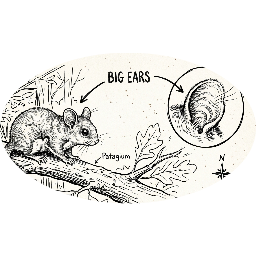
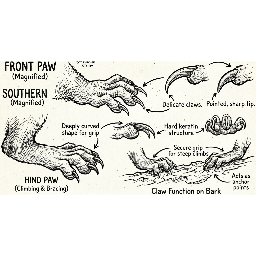
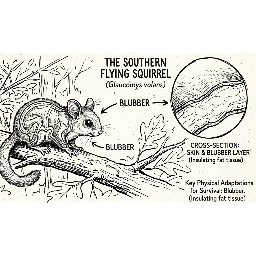
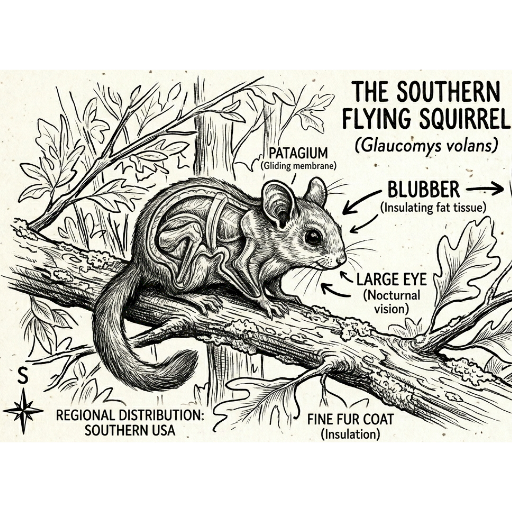
1. The "Wings" (Patagium)
They have a special fold of skin called a patagium that stretches from their wrists to their ankles.
When they jump, they spread their limbs out like a parachute and can glide over 150 feet in a single leap!
2. Giant Night-Vision Eyes
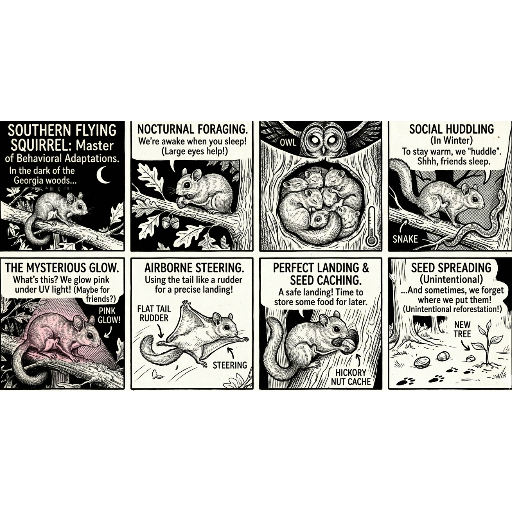
Because they live in the dark, they have evolved extraordinarily large, dark eyes.
3.Giant Night-Vision Eyes
Because they live in the dark, they have evolved extraordinarily large, dark eyes.
These eyes act like high-tech cameras, taking in every bit of moonlight to help them see branches, predators, and food in the middle of the night.
4. They Glow in the Dark!
This is a very recent scientific discovery: under a UV (ultraviolet) light, the belly of a Southern flying squirrel glows a bright bubblegum pink!
If a physical adaptation is a "built-in tool" on an animal's body (like a wing or a beak), a behavioral adaptation is a "survival trick" that the animal does to stay alive.
It’s all about the way an animal acts. Some behaviors are things they are born knowing how to do (instincts), and some are things they learn from their parents. To survive in the Georgia woods, the Southern flying squirrels to stay warm in the winter, they practice social huddling.
Instead of sleeping alone, up to 20 squirrels will crawl into one hollow tree hole. They pile on top of each other like a giant, furry sleepover to share their body heat.
Southern flying squirrels are social animals that "talk" to each other in three main ways:
Secret Sounds: They use high-pitched ultrasonic chirps that humans can’t hear. This lets them talk to friends without tipping off predators like owls. They also make "tseet" noises, similar to birds, to warn the group of danger.
Smelly Messages: These squirrels have scent glands on their cheeks. They rub their faces on branches or nests to leave "sticky notes" that tell other squirrels who lives there or where the best food is.
Touch and Body Language: They use "cuddle communication" by huddling together to stay warm in winter. Their long whiskers help them feel their way around friends in dark nests, and a quick flick of their flat tail signals to others that they are about to leap!
Southern flying squirrels are very social and love living in groups! Here is how they hang out together:
Daily Sleepovers: Most of the year, they live in small groups and share a nest to sleep during the day.
Winter Huddles: When it gets freezing, they have a giant "squirrel pile!" Up to 20 squirrels will squeeze into one tree hole to act like living blankets, sharing body heat to survive the cold.
Friendly Neighbors: They aren't grumpy about their space. They often let "stranger" squirrels join their
huddles just to keep everyone warmer.
- Full access to our public library
- Save favorite books
- Interact with authors
- < BEGINNING
- END >
-
DOWNLOAD
-
LIKE
-
COMMENT()
-
SHARE
-
SAVE
-
BUY THIS BOOK
(from $6.59+) -
BUY THIS BOOK
(from $6.59+) - DOWNLOAD
- LIKE
- COMMENT ()
- SHARE
- SAVE
- Report
-
BUY
-
LIKE
-
COMMENT()
-
SHARE
- Excessive Violence
- Harassment
- Offensive Pictures
- Spelling & Grammar Errors
- Unfinished
- Other Problem






COMMENTS
Click 'X' to report any negative comments. Thanks!