
Colonial Period
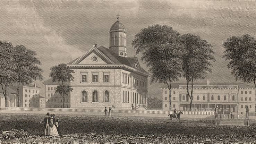
In 1636, Harvard College was established as the first institution of higher learning in the American colonies. Founded just sixteen years after the Pilgrims arrived, its primary purpose was to educate and ensure a steady supply of literate, learned Puritan ministers for the community.
Colonial Period
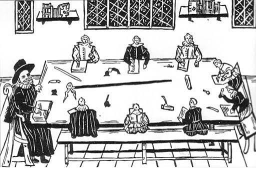
In 1647, the Massachusetts Old Deluder Satan Act laid the groundwork for American public education by legally requiring towns to provide schooling. The landmark law mandated that towns of 50 families hire a reading teacher and towns of 100 families establish a Latin grammar school, aiming to preserve biblical literacy against spiritual ignorance.
Colonial Period
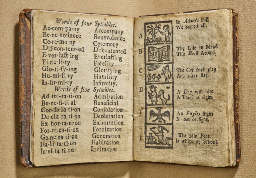
Around 1690, the publication of The New England Primer established the bedrock of colonial literacy as a wildly popular textbook. It systematically intertwined reading skills with religious indoctrination by combining alphabet lessons with strict Calvinist theology and moral verses.
Colonial Period
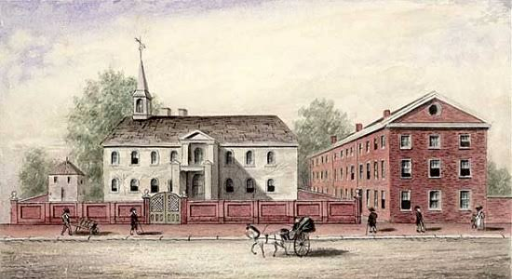
In 1751, Benjamin Franklin's proposed Philadelphia Academy opened, breaking away from traditional classical and religious curricula to offer a secular, practical education. The innovative school focused on teaching functional skills like accounting, navigation, and modern languages to support a rapidly growing merchant class.
Early National Period
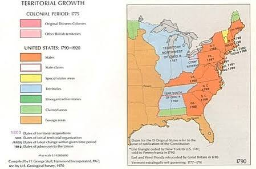
In 1785, the U.S. government passed the Land Ordinance, which laid the physical and financial foundation for public education in western territories. By mandating that newly surveyed lands be divided into townships and explicitly reserving "Lot No. 16" of each township for school funding, this legislation established the historic precedent of federal support for local public schooling.
Early National Period
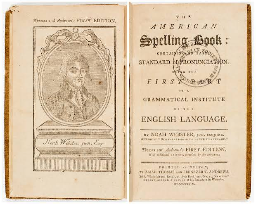
In 1783, Noah Webster published The American Spelling Book (known as the Blue-Backed Speller) to decouple American culture from Great Britain. The wildly popular book standardized a distinct, simplified version of American English and infused daily grammar lessons with patriotic themes, serving as the foundational textbook for millions of school children.
Early National Period
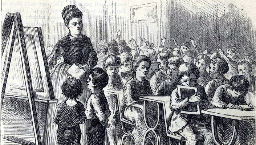
Proposed widely in the 1780s, Thomas Jefferson’s "Bill for the More General Diffusion of Knowledge" argued that a sustainable democracy required an educated electorate. Though initially rejected, the radical proposal advocated for a multi-tiered, state-funded public school system offering three years of free education to all free boys and girls, with scholarships to send the most talented impoverished students to higher education.
Early National Period
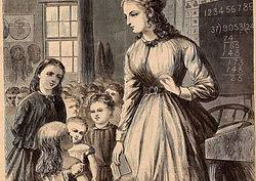
In 1787, Benjamin Rush championed "Republican Motherhood" by advocating for advanced female education in science, literature, and civic duty. His address to the Young Ladies' Academy of Philadelphia argued that women needed a substantial education not for political rights, but to successfully raise virtuous, patriotic sons capable of governing the new republic.
Common School Movement
In 1837, Massachusetts established the nation's first statewide board of education and appointed Horace Mann as its first secretary. Mann used this platform to champion free, universal, and non-sectarian public education, establishing a reform blueprint rapidly adopted across the North and West.
- Full access to our public library
- Save favorite books
- Interact with authors
The End of Historical Roots of Education
- < BEGINNING
- END >
-
DOWNLOAD
-
LIKE
-
COMMENT()
-
SHARE
-
SAVE
-
BUY THIS BOOK
(from $3.19+) -
BUY THIS BOOK
(from $3.19+) - DOWNLOAD
- LIKE
- COMMENT ()
- SHARE
- SAVE
- Report
-
BUY
-
LIKE
-
COMMENT()
-
SHARE
- Excessive Violence
- Harassment
- Offensive Pictures
- Spelling & Grammar Errors
- Unfinished
- Other Problem





COMMENTS
Click 'X' to report any negative comments. Thanks!