 Dedicated to Mrs. Johnson because she is an awesome
teacher who had so much faith in me to complete
this project.
This book was created and published on StoryJumper™
©2015 StoryJumper, Inc. All rights reserved.
Publish your own children's book:
www.storyjumper.com

 Table of Contents
Chapter 1: Sight
Chapter 2: Hearing
Chapter 3: Taste
Chapter 4: Smell
Chapter 5: Touch
 Chapter 1: Sight
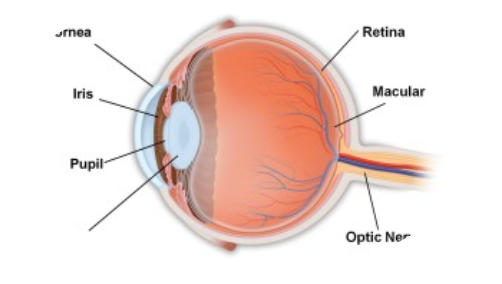 corneairispupillensretinamacularoptic nerve
 Know your Eyes
Your eyes are always working! They take in tons of information
about the world around you — shapes, colors, movements, and
more. Then they send info and stuff to your brain so the brain
knows what's going on in the outside world.
Now lets talk about the parts of the eye! The dark circle in the
center of the eye is called an iris. Inside the iris is the pupil, which
is a small black spot. In a dark room, your pupil is big while in a
well lit room the pupil will be little. Light then passes through the
cornea, and the lens to reach the retina. The optic nerves take
the upside down image from the retina to the brain. The brain
then inverts the image and makes sense of it.

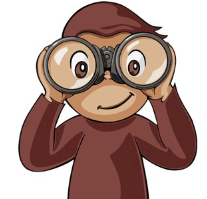
 Eye Diseases
Glaucoma - A group of eye conditions that can cause
blindness.
Myopia - A condition in which close objects appear clearly, but
far ones don't
Astigmatism – A vision condition that causes blurred vision
due to an irregular shape of the cornea, or an imperfection in
the eye’s curvature
Presbyopia – gradual loss of the eyes ability to focus on
nearby objects. Usually occurs in the middle and old age
Cataract – Clouding of the normally clear lens of the eye
Conjunctivitis - Inflammation or infection of the outer
membrane of the eyeball and the inner eyelid.
 Chapter 2: Hearing
 ear
earcanalouter earmalleusincusstapesinner
earcochleamiddle
eareustachian tubeear drumpinna
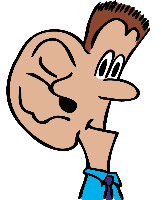
 Know Your Ears
Your ears hear everything! They take the sounds, make them
make sense, and then send the sound messages to the brain. But
that is not all they do! Ear also help your balance, so you don't fall
over!
The war is divided into three different sections: the outer ear, the
middle ear, and the inner ear. These parts all work together so you
can hear and process sounds!
 Ear Diseases
Otitis – An ear infection. An inflammation of the inner, middle,
or outer ear, often with infection.
Meniere’s Disease – An inner ear disorder that causes episodes
of vertigo (spinning)
Otosclerosiss – A hereditary disorder where there is excessive
growth in the bones of the middle ear that gradually cause
deafness
Presbycusis – age related hearing loss
 Chapter 3: Taste
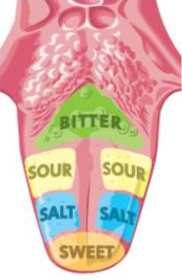 bittersoursoursaltsaltsweet
 Know Your Tongue
The muscle for talking and tasting! The front of the tongue is
super flexible and can move around a lot; this is how it can
make words. This part also helps you eat because it moves the
food while you chew it!
The back of your tongue is just as important! Once the food is
all chewed up and mixed with some spit, the back muscles start
working. They move and push small bits of food along with spit
into your esophagus, which is a food tube that goes from your
throat to your tummy.

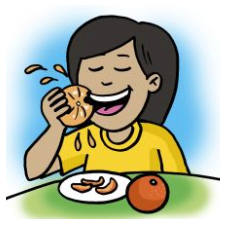
 Tongue Diseases
Aguesia – loss of the sense of taste
Hypoguesia – a reduced ability to taste
You've previewed 14 of 22 pages.
To read more:
Click Sign Up (Free)- Full access to our public library
- Save favorite books
- Interact with authors

- < BEGINNING
- END >
-
DOWNLOAD
-
LIKE(1)
-
COMMENT()
-
SHARE
-
SAVE
-
BUY THIS BOOK
(from $4.39+) -
BUY THIS BOOK
(from $4.39+) - DOWNLOAD
- LIKE (1)
- COMMENT ()
- SHARE
- SAVE
- Report
-
BUY
-
LIKE(1)
-
COMMENT()
-
SHARE
- Excessive Violence
- Harassment
- Offensive Pictures
- Spelling & Grammar Errors
- Unfinished
- Other Problem





COMMENTS
Click 'X' to report any negative comments. Thanks!